SEISMO-ELECTRIC GROUNDWATER PROSPECTING
Based in Mareeba, Queensland
Who Are we
Aquifer Mapping Australia was set up by exploration geologist Kim Hillier who had previously worked for a Sydney base organisation that utilised seismo-electric technology for ground condition mapping on civil engineering projects as well as groundwater prospecting for bore locations. His role with this organisation was survey design, field work and data interpretation. He has so much faith in the technique, he bought the equipment and brought it to Mareeba in Far North Queensland. Locally, we have done surveys for block owners on the north Tablelands.
SEISMO-ELECTRIC SURVEYING
WHAT IS IT AND HOW How does it help find groundwater
The seismo-electric effect refers to the generation of electrical fields as a result of seismic wave propagation through water bearing aquifer rocks. This phenomenon provides a powerful tool for subsurface exploration, integrating seismic and electromagnetic methods to reveal information about porosity, permeability, and fluid content.
The seismo-electric method works by detecting electromagnetic fields generated by seismic waves as they interact with subsurface materials. It is particularly useful for assessing hydraulic conductivity and permeability, which can be valuable for groundwater and resource exploration.
Locally, we have done surveys for block owners on the north Tablelands, from Koah to Dimbulah and out to Mr Carbine. Those that have drilled on our recommendations have all found useable water at the predicted depth and flow rate.
What’s involved? What gets delivered
The agreement delivers:
A preliminary report that details the planning and preparation to help you find your groundwater needs. We do an assessment of local geology, local registered bores and put together a proposed survey plan.
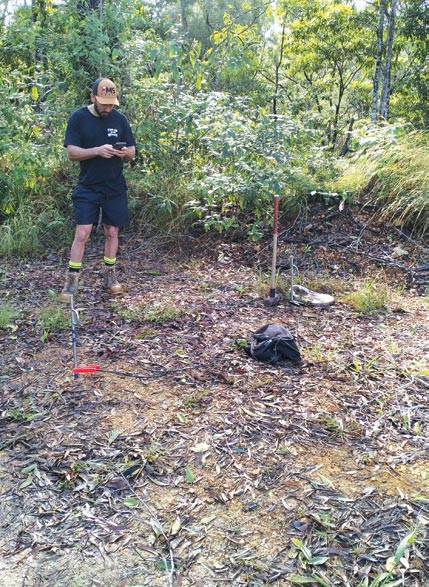
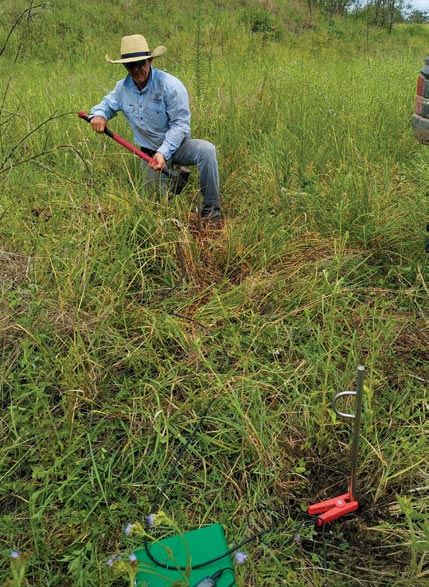
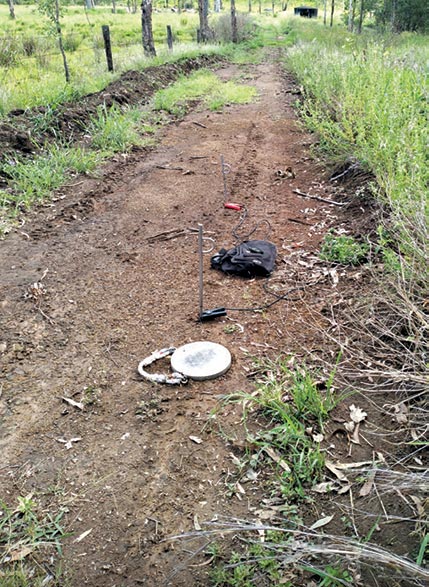
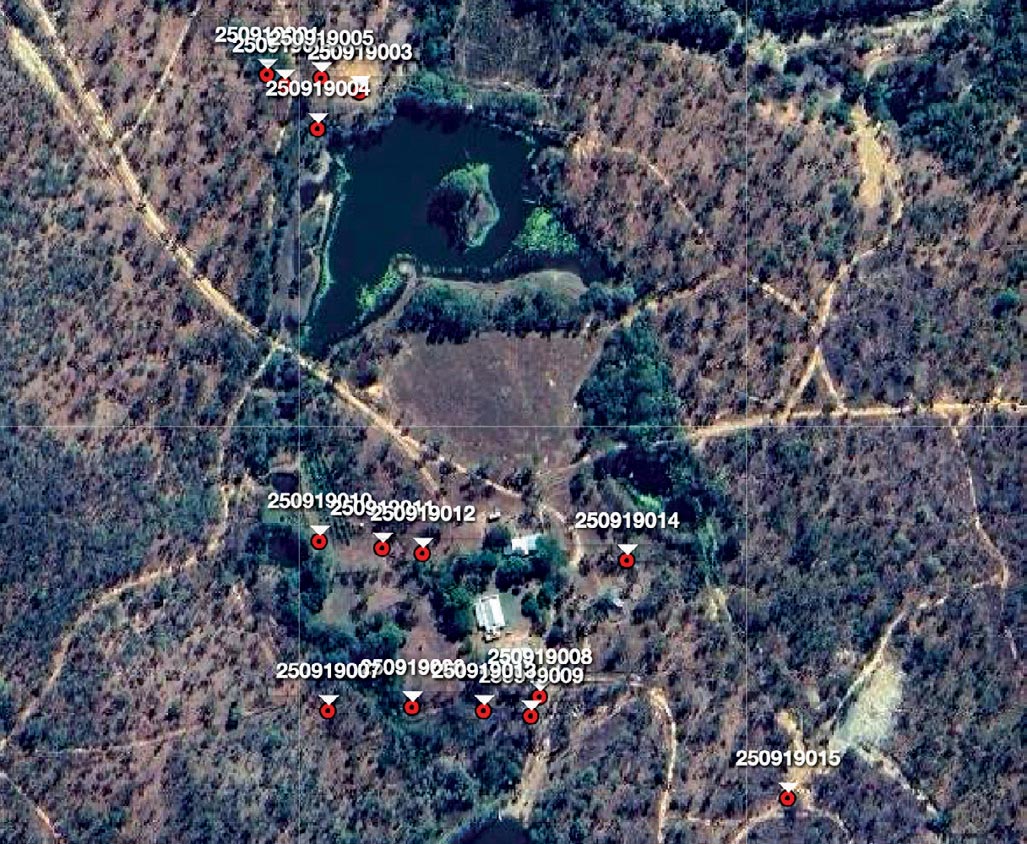
Our team comes to your property for a preliminary site visit to assess access and potential survey sites. Then we undertake the survey. For small sites, the field work can be completed in one day. Big stations take longer. It normally takes 24-48 hours to have the final report prepared and sent to you.
The report includes
A detailed html file than can be kept and accessed offline.
A PDF report of the major results and recommendations.
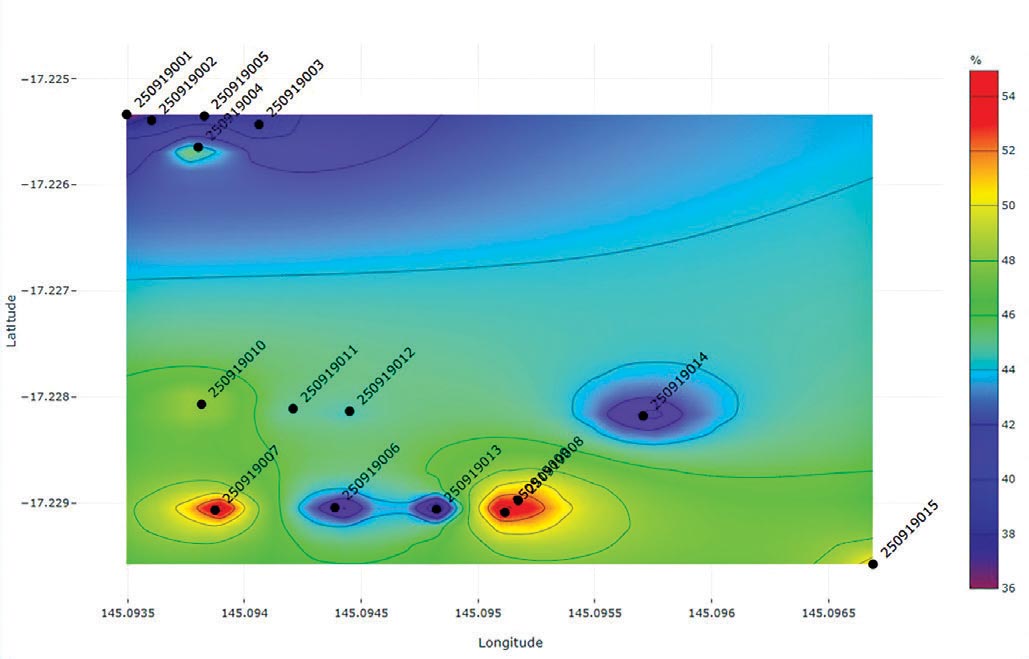
Features such as Aquifer Probability and Sustainable Yield are calculated from an array of hydrologic properties such as hydraulic conductivity, transmissivity, water quality, porosity and permeability and geotechnical, acoustic and electrical properties.
These properties are presented as plans, projected sections and virtual logs.
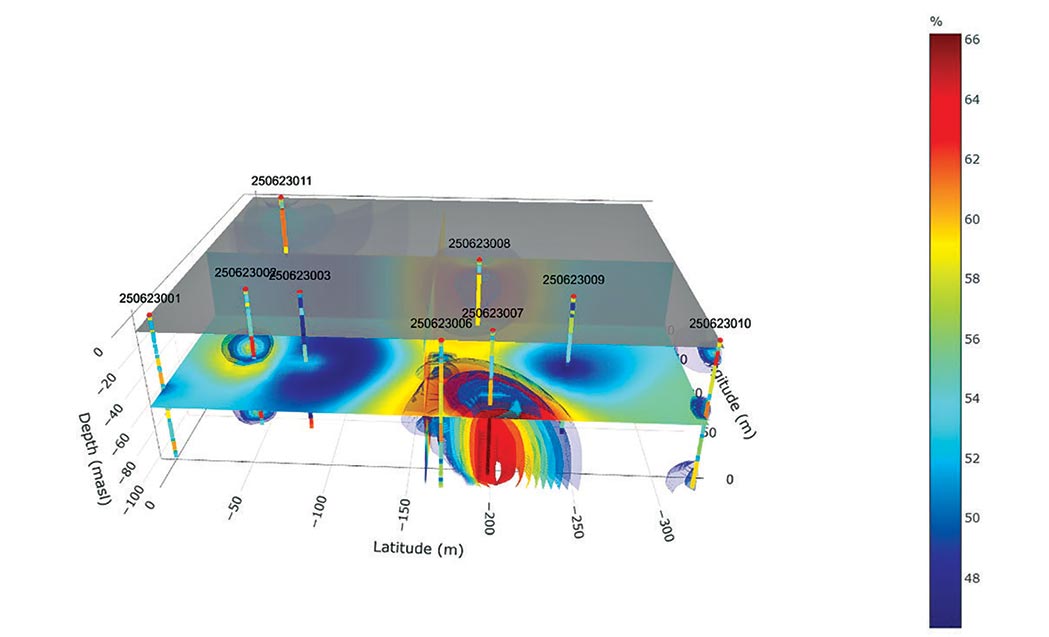
Calculated Aquifer Probability (%)
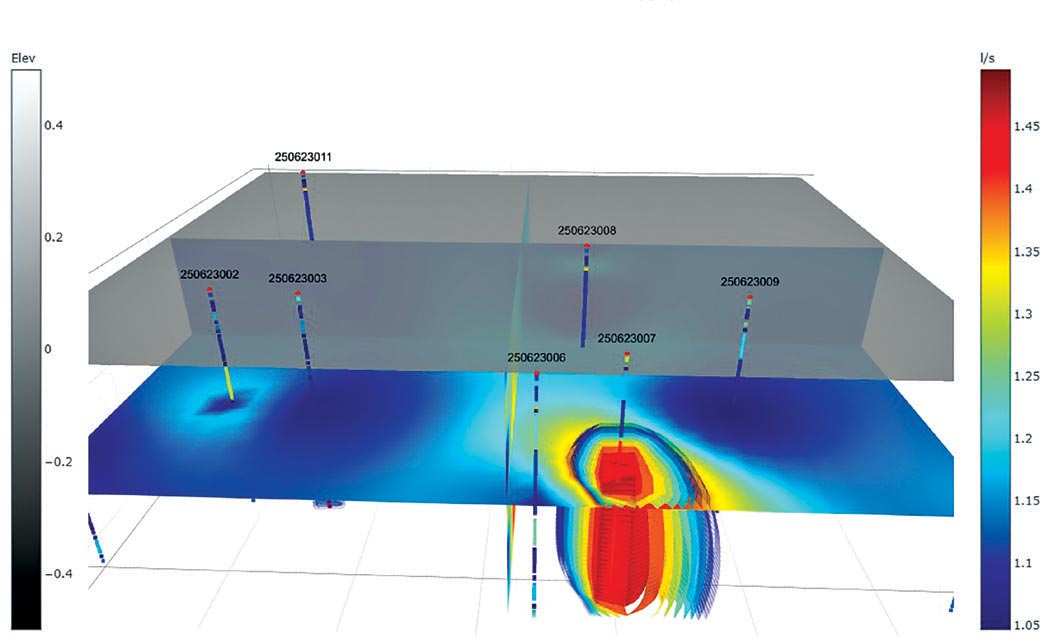
Calculated Sustainable Yield Estimate (l/s)
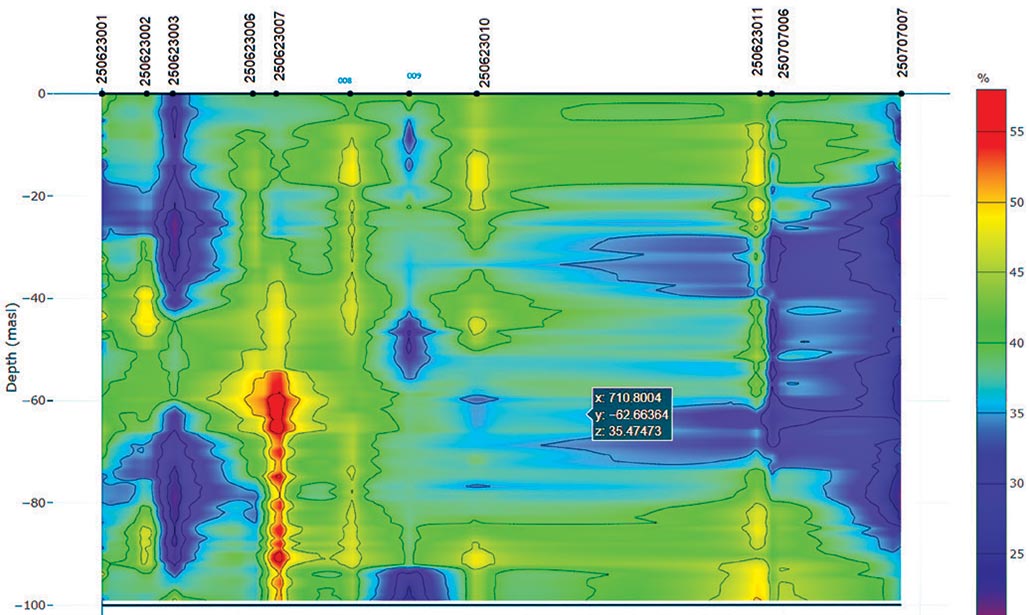
Calculated Aquifer Probability (%)
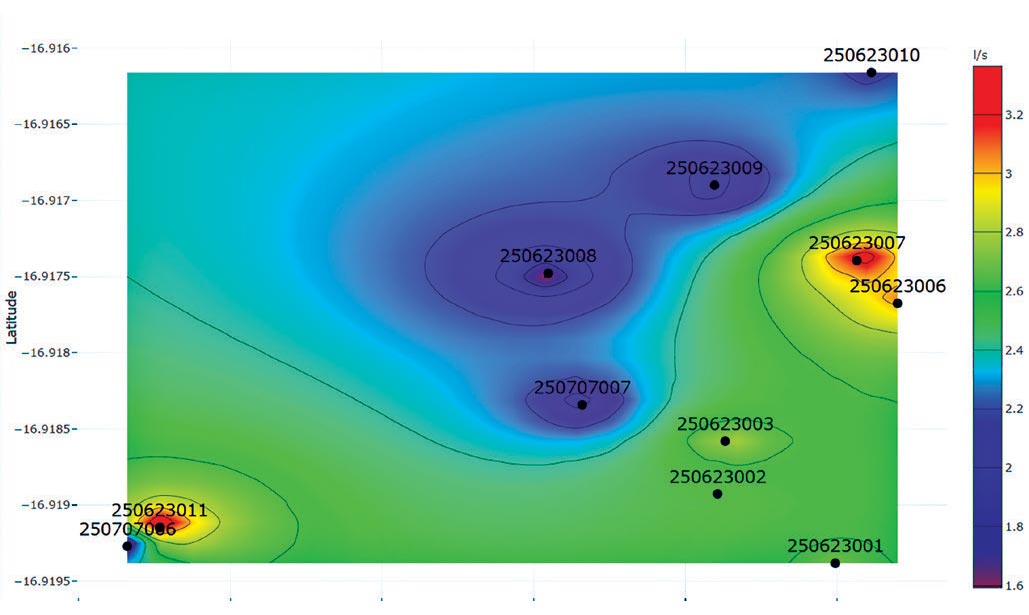
Calculated Sustainable Yield Estimate (l/s)
SURVEY TIME AND RESULTS TURN-AROUND
Surveys can be completed quickly averaging approximately 6 points per hour in average terrain. Survey site spacing can be varied with the average for small rural blocks being 25 metre spacing averaging 10 to 20 points per hectare. Consideration is given to access for a drilling rig, topography and underlying geology. Data processing requires internet connection and can be carried out once the survey is complete. Results can be presented the following day.
Confidence and Risk
Reduce the risk of a dry hole
The program calculates the Risk of attaining specified yield parameters defined by the site noise content, data correlation, data signal to noise ratios and number of strikes used in processing.
It also calculates the Confidence in attaining the point specified yield parameters indicated in the recommendations table.
These factors will help you make an informed decision on bore placement and depth.